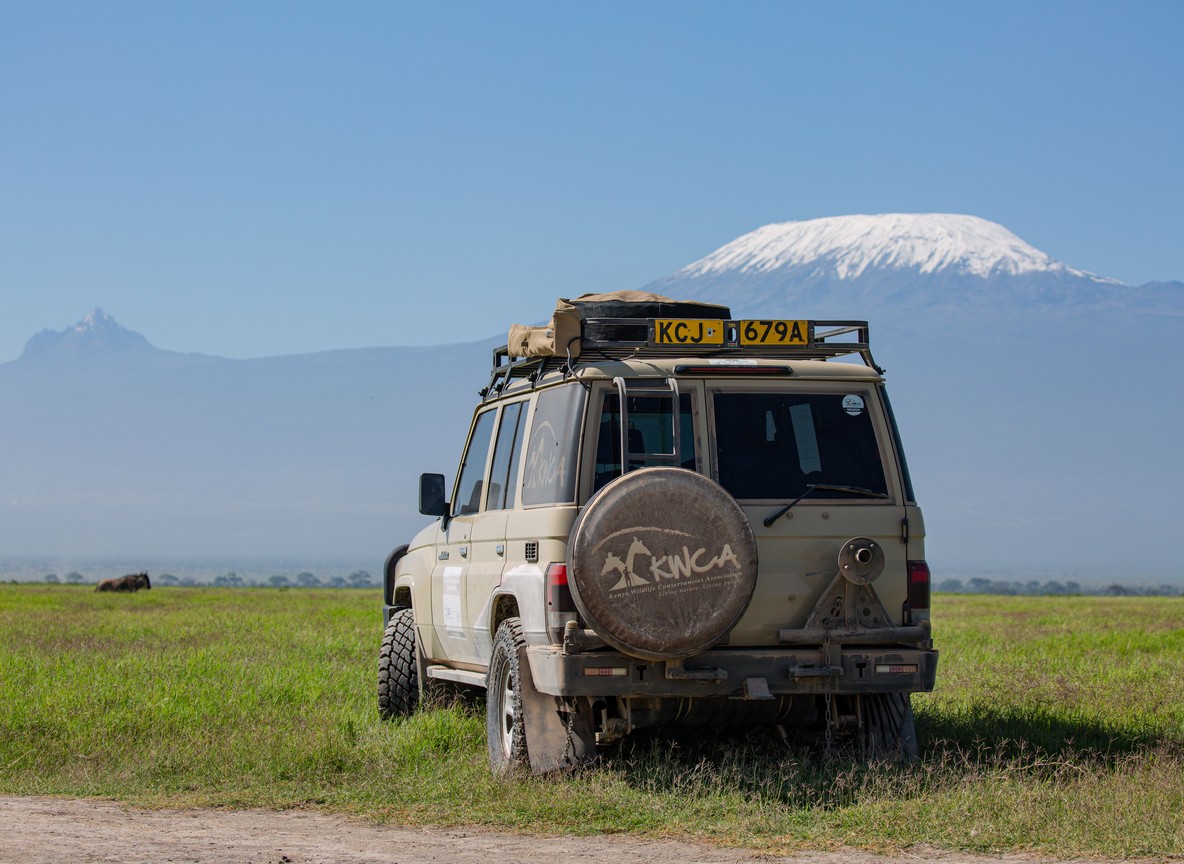
These two sightings happen in the same park on the same morning, but they are not the same experience. An elephant family herd gives you a window into one of the most complex social structures in the animal kingdom. A solitary bull gives you a close encounter with the most physically impressive elephant individual you are likely to see. Understanding the difference before you go makes your time in the field considerably richer.
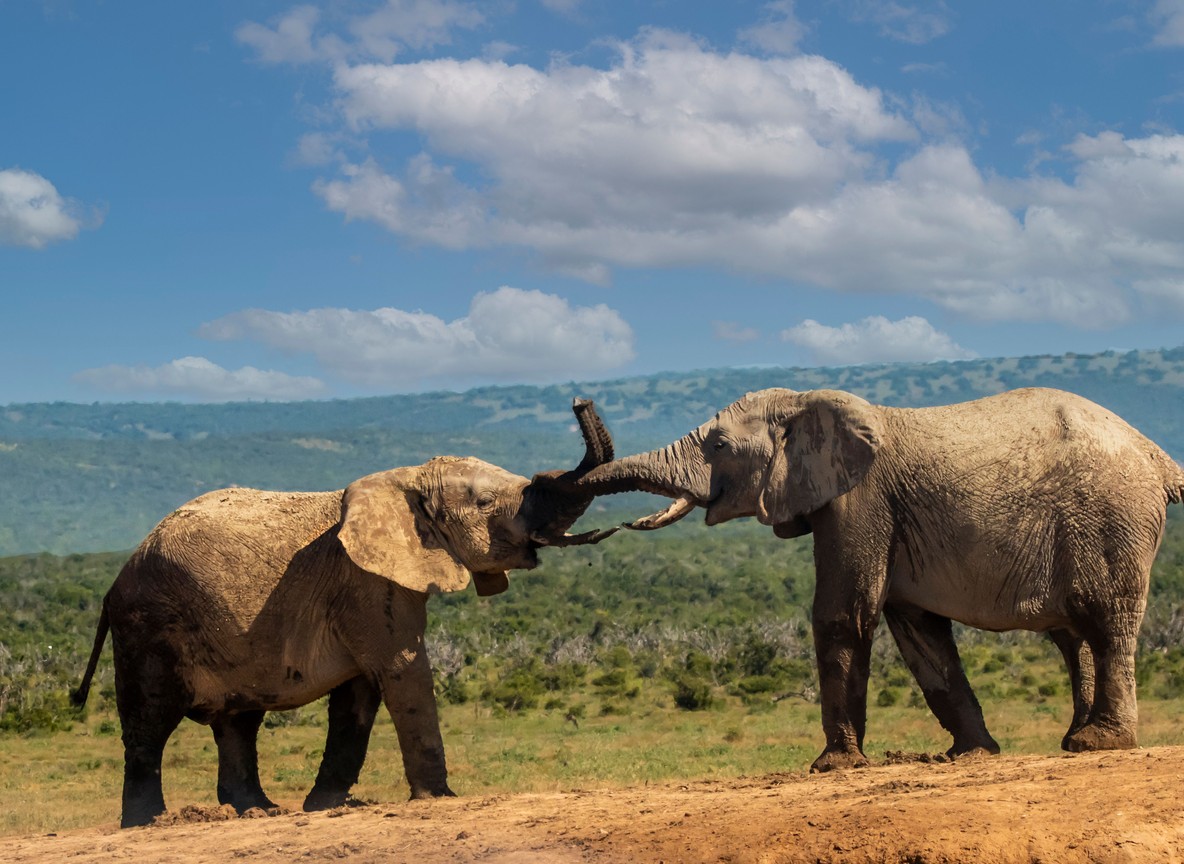
Elephant herds vs solitary bulls in Kenya is a question worth thinking through before your safari, not only because the sightings feel different but because the behavior reading skills are different too. A guide who explains what you are watching can shift a sighting from visually impressive to genuinely memorable.
Here is a practical breakdown of both.
Elephant Social Structure: The Basics
African elephants live in a matriarchal society. The fundamental unit is the family herd: typically eight to fifteen individuals led by the oldest and most experienced female, called the matriarch. Family herds consist of the matriarch, her daughters and granddaughters, young calves of both sexes, and juvenile males up to roughly 12 to 14 years of age.
When two or more related family groups range the same area, they form a “bond group.” When multiple bond groups converge at a water source or productive grazing area, the gathering can involve 50 to 200 or more individuals. Tsavo and Amboseli both produce these large aggregations, particularly during dry season months.
At around 12 to 15 years of age, young males leave the family group and begin living largely independently. They may join loose bachelor groups or range alone, associating with family groups mainly during breeding periods.
Kenya Elephant Family Herds: What to Watch For
Watching a Kenya elephant family herd with proper guide interpretation is one of the most behaviorally rich experiences in African wildlife.
Calf interactions: Young calves are protected and guided by multiple adults, not only their mothers. Watching a calf learning to coordinate its trunk, being physically assisted across a stream, or nursing is a sequence that stays with you. The community parenting dynamic, allomothering in the scientific literature, is visible and legible once you know to look for it.
Matriarch leadership: The matriarch sets the pace and direction of every family movement. Her body language communicates the group’s level of alert to every other elephant in the family. When she freezes and raises her head, the whole family stops. When she decides to move toward a water source, the family follows within seconds. Watching her assess an unfamiliar vehicle is a lesson in elephant intelligence.
Greeting ceremonies: When two related families meet after a period apart, the reunion is unmistakable. Trumpeting, spinning, touching faces, rumbling vocalizations that you can feel as much as hear. These greeting sequences are some of the most emotionally resonant moments available on any safari.
Defensive formations: When a family perceives a threat, adults cluster with calves at the center, facing outward. The matriarch advances toward the threat. This is also when you may see a mock charge: ears spread wide, dust kicked up, a stop before contact. A guide who understands the difference between a warning display and a genuine charge is essential in moments like this.
Solitary Elephant Bulls: What to Watch For
Adult male elephants leave family groups and spend most of their adult lives ranging independently. Understanding what drives their behavior makes solitary bull sightings considerably more interesting.
Musth: Bulls cycle through a hormonal state called musth, a period of dramatically elevated testosterone. A bull in musth is identifiable by: temporal gland secretion (a dark oily substance running down the side of the face), dribbling urine that stains the legs dark, more deliberate and sometimes restless movement, and a heightened focus on locating females or moving away from competing males. A musth bull is one of the most powerful animals you will encounter on a Kenya safari. Experienced guides increase their distance from musth bulls and adjust their approach accordingly.
The “askari” relationship: Young bachelor bulls sometimes associate with larger, older males in a relationship described as “askari” or guard dynamic. The older bull tolerates the young one as a companion, and the younger bull learns from observing the elder’s movement patterns and responses to the environment. When you see two bulls of noticeably different sizes ranging near each other, this is often what you are looking at.
Feeding behavior: Solitary bulls feed more aggressively and for longer uninterrupted periods than family groups. Without calves to manage, a bull can be single-minded about finding the best food. Watching a large bull strip bark from an acacia, or dig at a dry riverbed for mineral-rich water, is a direct demonstration of the physical capability that comes with age and size.
Where to See Elephants in Kenya
Family herds: best locations
- Amboseli National Park: Kenya’s most famous elephant destination, with large matriarchal groups against the Kilimanjaro backdrop. The population has been continuously studied since 1972 and individual animals are well known to experienced guides.
- Tsavo East: Very large herds, often 100 or more animals together, including the visually distinctive elephants reddened by Tsavo’s laterite soil.
- Samburu: Family groups concentrated at the Ewaso Nyiro River, particularly reliable in dry conditions.
- Masai Mara: Year-round elephant presence, with families particularly visible in the riverine forest zones.
Solitary bulls: best locations
- Amboseli, which historically carries some of Kenya’s most impressive tusked bulls
- Tsavo East, where older bulls are large and the red-dust coloring makes them visually striking
- Laikipia (Ol Pejeta and Lewa conservancies offer high-quality controlled encounters)
- Samburu during dry season, when bulls concentrate at the river
Key Differences at a Glance
| Factor | Family Herd | Solitary Bull |
|---|---|---|
| Group size | 8 to 200+ with bond groups | 1 to 5 in bachelor groups |
| Social behavior | Complex, highly readable | Focused on feeding and movement |
| Calves present | Yes | No |
| Photography | Interaction, relationships, calves | Large individual portraits, close feeding |
| Relative danger | Moderate, protective mothers | Higher if bull is in musth |
| Musth visible | No (females do not show musth) | Yes, clearly identifiable |
| Best season | Year-round | More visible in dry season |
Which Is the Better Sighting?
The honest answer is that they offer fundamentally different things, and “better” depends entirely on what you came for.
Family herd sightings are behaviorally rich. The social interactions, the matriarch’s decision-making, the calves learning to exist in the world, these give you a narrative you can follow for 30 to 45 minutes without the sighting ever feeling static. If you want to come away from your safari with a real sense of how elephants live, family herds are where that happens.
Solitary bull sightings give you access to the most physically impressive elephant individuals. Large, often scarred, with tusk development that family females rarely reach, these animals are the archetypal image of the African elephant. The encounter is quieter and less socially complex, but the physical presence is something else.
A well-structured Masai Mara or Amboseli safari can include both in the same trip. Family groups are reliably present across most game-drive routes. Bulls appear with less predictability but enough frequency that most multi-day safaris turn one up.
Explorer Notes: Getting the Most from Each Sighting
When you are with a family herd, ask your guide to identify the matriarch and explain how to read her posture. Ask which animals are related, and how. Ask what the calves are doing relative to what they will be doing in five years. A guide who knows the Amboseli population by name can turn a good sighting into a remarkable one.
When you encounter a solitary bull, the first thing worth checking with your guide is musth status. If the bull is in musth, the guide’s decision-making about distance and approach angle matters more than usual. If the bull is not in musth, a calm, patient observation often yields feeding and mineral-licking behavior that is unhurried and very close.
In both cases, engine-off viewing is worth requesting when the animals are relaxed. The difference in animal behavior when a vehicle goes silent is often immediate.
Conclusion: Two Windows into the Same Animal
Family herds and solitary bulls are not alternatives so much as they are two different aspects of elephant natural history. One shows you how elephants build and maintain social bonds across generations. The other shows you what an individual elephant can become when it has had 40 or 50 years of life and the full expression of its physical development.
A Kenya safari that holds space for both is richer than one that focuses on only one type. But if you are pressed to choose a primary focus for a short trip, family herds in Amboseli or the Mara’s riverine zones will deliver more consistent depth. Bulls come, but on their own schedule.
Next Steps
For broader safari planning context, see the Kenya safari planning guide on touringinsights.com. For specific destination comparisons, see the Amboseli vs Masai Mara guide and the best time to visit Kenya for elephants.
Official park information and current fees are available from the Kenya Wildlife Service.
Every trip described here can be tailored: dates, budget, camps, and pace built around you.
Get a Personalised Safari